Friday, 18 April 2014

Nigeria - New custom tariffs on imported vehicles (tokumbo cars) too expensive for local sellers


Nigerian website to advertise used cars selling
Last December, the federal government in Nigeria decided to introduce new custom tariffs (Thisdaylive, Dec. 2013) on imported vehicles, the so called "tokunbo cars", fairly used carsusually sold by local sellers also through the internet on websites like flingnow.com. After the protests of associations of local sellers, such as the National Association of Government Approved Freight Forwarders (NAGAFF), the policy should be substantially revised (Ajetun Blog, Feb. 2014).
However, it seems from more recent articles that the Nigeria Customs Service (NCS) has commenced full implementation of the 70 percent tariff on imported vehicles (Business Day, Mar. 2014). The idea of the Federal Government to discourage the importation of used cars, which represent the 85 % of imported cars, should support and develop the local automotive market and industry as already done in the past by countries like Pakistan, India and South Africa as declared Dr. Olusegun Aganga, Minister of Industry, Trade and Investment.

The measure, per se, could be a good incentive to facilitate the establishing of a local automotive industry. However, the increase of the tariff from 22 % to 70% could just annihilate the current market stocks and a modification addressing the needs of the sellers would be advisable. Income deriving from higher  taxation could not balance the plausible collapse of sells.

In the meantime, as written on the magazine African Review, Kia Motors, the South Korean car manufacturer, signed an agreement with its local car distributor Dana Motors to set up a vehicle assembly plant in Nigeria within two years. (Issuu - African Review Magazine, Apr. 2014). What will happen next?

Friday, 11 April 2014

Project Mawingu - Kenya flying high

The African aviation market is one of the most interesting sectors for the growing economies of the continent. In a region with poor surface infrastructures, the development of efficient and quality airlines is essential to support expanding businesses at local and international level.

The delivery of the first of seven Boeing 787 Dreamliner marks for Kenya Airways an important turning point and progress for the implementation of Project Mawingu, the 10 year strategic plan which will increase the number of destinations for the carrier by 50% within 2021:

excerpt from  Kenya Airways website

factors contributing to this significant development::

1 -  Regional level: Kenyan flag carrier is the most important airline serving the growing economies of the East African Community  (Burundi, Kenya, Rwanda, the United Republic of Tanzania, and the Republic of Uganda) .

2 - International level: As a member of the SkyTeam consortium, Kenya Airways could count on the support of the other 19 partners. In addition is going to establish soon an agreement with Etihad reinforcing its position in the Middle East.

Wednesday, 9 April 2014

International Telecommunication Union launched global project on cybersecurity

In occasion of a presentation made at the 14th edition of the World Telecommunication Development Conference (WTDC 14)  held  in Dubai and dedicated to the theme  "broadband and sustainable development", the Secretary-General of the International Telecommunication Union (ITU) Hamadoun TourĂ© introduced the Global Cybersecurity Index (GCI) project.

This initiative responds to the need to ensure, both at national and international level, effective and viable measures of safety and protection for those critical information infrastructures essential to each nation's security and economic well-being.
Coordination among authorities, private sector and citizens at national level and Cooperation at international level seem to be the key approach to implement ad hoc strategies for prevention, preparation, response, and recovery from incidents.

Background
By December 2013, targeted countries were invited to participate to the benchmarking exercise aimed at assessing the current situation of each nation state against the GCI by filling out a questionnaire.
The information provided to the index allowed the Union and nation states to better address the specific cybersecurity needs of any country by setting out the most appropriate strategy of intervention and identification of most viable tools.

 Analysis
This joint project developed by ITU in collaboration with ABI Research with the participation of the International Multilateral Partnership against Cyber Threats (IMPACT) aims to measure and rank the level of cybersecurity of each nation state by analysing the following five main areas:

Conceptual framework

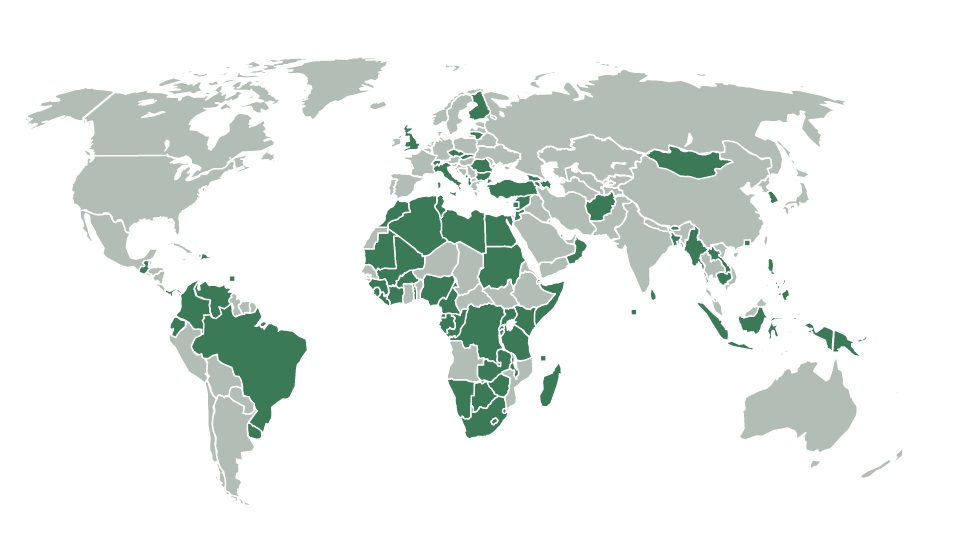
   gcimap.jpg

Current status

To date already 44 countries submitted their responses (green colour) and other 15 will soon provide their questionnaires. For those not replying, the index score will be calculated using secondary data.
Comprehensive data were collected for the Arab States and later processed in the  following table.