Wednesday, 11 August 2021
Summer 2021 tracked unprecedented number of wildfires in the Mediterrenean area. Watch the current situation with EFFIS maps
Tuesday, 10 August 2021
An overview on the Intergovernmental Panel on Climate Change (IPCC)
The IPCC Panel was established during its inaugural session taking place in Geneva from 9th to 11th November 1988. The Memorandum of Understanding between UNEP and WMO signed in 1989 lists the objectives of the panel:
1) To make assessments of available scientific information on climate change;
2) To make assessments of environmental and socio economic impacts of climate change;
3) To formulate response strategies to meet the challenge of climate change.
The Panel to fulfill its objectives constituted three Working Groups, responsible to respectively pursue each of those objectives, the joint IPCC Secretariat, based in the WMO headquarters in Geneva, and the IPCC Bureau in charge for supporting the activities of the three working groups.
The following factsheet summaries the activities carried out by the Panel since its constitution.
Thursday, 18 February 2021
Covid-19 pandemic crisis and the smart working revolution
The World Health Organization, once the coronavirus illness reached 118,000 cases in over 110 countries and territories around the world declared COVID-19 a pandemic on March 11(Time Magazine)
As a consequence, social distancing measures were, by no mean, implemented worldwide by governments to slower the virus run and, various business sectors, in particular those ones based on services creation and delivery, started relying on smart working practices for their employees.
Smart working is not a novel concept or standard. Constant technological developments are making possible new approaches changing the traditional professional relation of an employee with the workplace and their work responsibilities and performance.
For instance, the UK government published in 2013 a guide to promote the so called the Way We Work 3W initiative in support of smart working in the public sector.
However, the current pandemic crisis has definitely boosted this practice and what appeared to be a secondary phenomenon has gain momentum.
Definitions of smart working
https://www.unece.org.net4all.ch/fileadmin/DAM/stats/documents/ece/ces/ge.58/2017/mtg4/Paper_11-_Di_Nicola_rev.pdf
https://ec.europa.eu/futurium/en/european-ai-alliance/project-eu-xxi-or-how-lead-ai-world-open-letter-european-parliament-european
https://www.gov.uk/government/publications/the-way-we-work-tw3-best-practice-guidelines-for-smarter-working
http://www.flexibility.co.uk/downloads/TW3-Guide-to-SmartWorking-withcasestudies-5mb.pdf
Statistics
Reference
Chart from research report jointly published in 2017 by ILO and Eurofound working anytime, anywhere: the effects on the world of work.
The abbreviation T/ICTM stands for Telework/ICT-mobile work.
Monday, 26 October 2020
How we measure CO2 emissions?
Snow falling seasonally in Greenland and Antarctica or on glaciers around the globe is slowly compressed into ice and during this process, bubbles of air remained trapped in the ice. Scientists and researchers, using ice cores, are able "to read" these bubbles and thus to measure the concentration of gases, including the one of CO2 for a specific period of time.Ice cores are created drilling the ice pack as shown in the picture underneath.
![]() | |
| Researcher Margarita Marinova uses an auger to drill a core from the ice pack Credit: Jennifer Heldman, National Science Foundation (NSF) |
The layers of ice accumulating in the coldest regions of Earth become thus a sort of paper where scientists can read the type of atmosphere characterising other times. Ice core records allow us to get continuous reconstructions of past climate, going back a minimum of 800,000 years in the history of world's ancient amosphere. By watching past concentrations of greenhouse gases in layers in ice cores, scientists can calculate how modern amounts of CO2 and methane compare to those of the past, and, essentially, compare past concentrations of greenhouse gases to temperature.
Wednesday, 11 March 2020
COVID-19 outbreak in the UK and London as of 10th March 2020
| London COVID-19 cases (10th March 2020) |
Daily, Public Health England provides data on the disease outbreak using the ArcGIS software by Esri, the same application used by John Hopkins University to track the growth of cases at global level.
| Tracking coronavirus cases |
NHS page
Prime Minister'statement (9th march 2020)
Friday, 8 June 2018
World Ocean Day 2018

Why celebrate World Oceans Day?
We celebrate World Oceans Day to remind everyone of the major role the oceans have in everyday life. They are the lungs of our planet, providing most of the oxygen we breathe.The purpose of the Day is to inform the public of the impact of human actions on the ocean, develop a worldwide movement of citizens for the ocean, and mobilize and unite the world’s population on a project for the sustainable management of the world's oceans. They are a major source of food and medicines and a critical part of the biosphere. In the end, it is a day to celebrate together the beauty, the wealth and the promise of the ocean.
Action focus for 2018: preventing plastic pollution and encouraging solutions for a healthy ocean
- 80% of all pollution in the ocean comes from people on land.
- 8 million tonnes of plastic per year end up in the ocean, wreaking havoc on wildlife, fisheries and tourism.
- Plastic pollution costs the lives of 1 million seabirds and 100,000 marine mammals per year.
- Fish eat plastic, and we eat the fish.
- Plastic causes $8 billion in damage to marine ecosystems each year.
Friday, 9 June 2017
Borlaug Fellowship Program at USDA promotes United States cooperation with developing countries
![]() |
| Bourlag biography from Nobel website |
Norman Borlaug won the Nobel Peace Prize in 1970. He was granted the prize for the primary role played during the so called Green Revolution.
He worked in Mexico, India and Pakistan to promote the introduction of more productive varieties of crops developed in years of research and testing.
The Green Revolution refers to the capacity to use technology to modify the environment so as to create more optimal conditions for crops and livestock than nature alone can offer (i.e. if it is dry, irrigate; if soil fertility is low, fertilize; if pests and weeds invade crops, spray or dust; if livestock are threatened by disease, vaccinate and medicate; or if more energy is needed to till the land, mechanize and use fossil fuels). Improved varieties of rice and wheat could benefit from the use of external inputs (including water) that provided good growing conditions for realizing the genetic potential of the new varieties. The creation of socio-economic enabling environments that opened up for the use of these inputs and created markets for the sale of the produce was an integral part of this change. (FAO, 1996)

SaveSave
Monday, 5 June 2017
Which concerns raise the growing use of palm oil in the food industry?
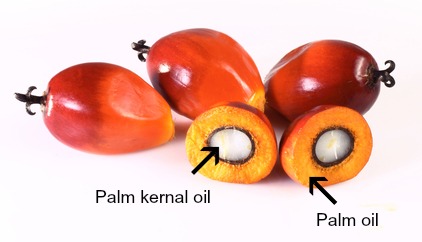
The use of palm oil in the food industry has grown exponentially. Palm oil’s technical utility comes from its high melting point. Since palm oil is semi-solid at room temperature, it has a variety of uses from baking products and spreads to frying and though animal fats also have this quality, they are far more expensive to produce. The commodity’s cheap production cost stems from the fact that the palm plant essentially offers a two-for-one deal.
![]() |
| www.citymarket.coop |
Major concerns with the spread use of this product are about its environmental sustainability and health issues.
Environmental problems
Palm is a tropical plant and ideal growing conditions are found only on the equator or 10 degrees of latitude north / south. At the same time, these regions house vast areas of tropical rainforest rich in biodiversity on the continents of Asia, Africa and South America. Demand for edible vegetable oils, has grown steady in recent decades and palm oil plantations have expanded rapidly in number and size to meet the global demand causing heavy deforestation.
Indonesia and Malaysia count for 83% of the market share (GreenPalm.org), and for the high demand, expansion of plantations and production is forecast to continue menacing other portions of rainforest ecosystems.
Indonesia is planning to increase productivity by 40% by 2020 allocating other 5 millions of hectares to the production of this vegetable oil
![]() |
| Industry landscape, regulatory and financial overview, www.pwc.com |
image source: "Occurrence of 3-monochloropropanediol esters and glycidyl esters in commercial infant formulas in the United States" written by Jessica Leigh & Shaun MacMahon
The European Food Safety Authority, after publishing scientific articles presenting the results of experiments based on lab rats testing, has also recently released the Chemicals in food 2016 report.One section of the report is centred on the analysis the components resulting from the processing of palm oil described above.
According to the research undertaken by the Authority, current studies have registered low health concerns on the assumption of these components through ingestion of food using this type of vegetable oil.
However, in order to keep to the minimum the risks for health, the Authority has suggested to the competent commission the importance to establish at regulatory level a maximum level of glycidyl esters of 1.0 mg/kg to be applicable as from September 2017. EU authorities and producers will then discuss the level of contaminants allowed in the food.
This maximum level proposed by EFSA study should be in line with the commitment made by the EU Oil and Protein meal Industry. The commitment was very much welcomed by the Committee and it was acknowledged that it is a strong commitment requiring substantial efforts from the industry.
(source: https://www.food.gov.uk/sites/default/files/consultation-fatty-acid-esters.pdf)
Friday, 2 June 2017
New WHO report outlines strategies driving recent reforms and definition of primary objectives to effectively meet its mandate

Tuesday, 23 May 2017
EU-Indonesia Blue Book 2017. Summary of EU cooperation work
EU-INDONESIA RELATIONS
Indonesia is an important partner for the EU globally and in South East Asia and plays an active role in promoting regional integration by hosting the ASEAN Secretariat and promoting the region’s emerging political, security and economic architecture.
EU and Indonesia have started in April 2016 negotiations for a Comprehensive Economic Partnership Agreement (CEPA). So far, two rounds of negotiations have taken place. Once concluded, the CEPA will enable the free flow of goods, services and investments in a common market of 750 million people.
In this context, the EU has identified three priorities for its relations with Indonesia:
• Strengthening economic ties
• Deepening the political partnership
• Cooperating on regional and global challenges.
The CEPA will complement the EU-Indonesia Partnership and Cooperation Agreement (PCA), which entered into force in 2014.
THE REPORT1) Gender equality, human rights and good governance.
2) Climate change and environment
3) Economic cooperation
4) Education
5) Health
Thursday, 18 May 2017
GIZ project on communal protected areas - new strategy to preserve rainforests and their biodiversity
The project, centred on the collaboration between the indigenous population and the local authorities, aims at developing new forms of sustainable development by encouraging the use of forest products, like for instance, Copaiba oil, extracted from plants used to develop drugs to fight leishmaniasis, or syringes (natural rubber), achiote (a natural dye), wood and cocoa.
The project in Peru was commissioned by the German Federal Ministry for the Environment, Nature Conservation, Building and Nuclear Safety (BMUB)
. So far the initiative has been implemented for some 65,000 hectares of forest, resulting in more than 30 native communities improving their employment and income opportunities.
Further information:
International Day of Biodiversity: in Peru, indigenous groups are working with state authorities to manage communal conservation areas, thereby preserving biodiversity.
Conservación de la biodiversidad en áreas protegidas comunitarias de la región amazónica
Tuesday, 16 May 2017
New 2017 India philanthropy report launched
Monday, 8 May 2017
WIPO - Annual celebration of #worldipday 26th April
Wednesday, 3 February 2016
United States - Report on Forests and Rangeland drought to improve climate change planning and adaptation strategies
In particular, the report outlines that:
- Drought projections suggest that some regions of the U.S. will become drier and that most will have more extreme variations in precipitation.
- Even if current drought patterns remained unchanged, warmer temperatures will amplify drought effects.
- Drought and warmer temperatures may increase risks of large-scale insect outbreaks and larger wildfires, especially in the western U.S.
- Drought and warmer temperature may accelerate tree and shrub death, changing habitats and ecosystems in favor of drought-tolerant species.
- Forest-based products and values – such as timber, water, habitat and recreation opportunities – may be negatively impacted.
- Forest and rangeland managers can mitigate some of these impacts and build resiliency in forests through appropriate management actions.
| http://www.cpc.ncep.noaa.gov/products/Drought/ |
Sunday, 18 October 2015
Paris 2015 UN Climate Change Conference
The topics discussed during the meeting |
Wednesday, 29 April 2015
Corruption Perceptions Index - "If not us, then who?" "If not our generation, then whose generation?"
Monday, 20 April 2015
BRICS Development Bank maybe operative by the end of 2015

![]() |
| Population and economic power of BRICS economies |
- Purpose (Art.1) The Bank shall mobilize resources for infrastructure and sustainable development projects in BRICS and other emerging economies and developing countries, complementing the existing efforts of multilateral and regional financial institutions for global growth and development. To fulfill its purpose, the Bank shall support public or private projects through loans, guarantees, equity participation and other financial instruments. It shall also cooperate with international organizations and other financial entities, and provide technical assistance for projects to be supported by the Bank.
- Functions (Art. 3 Annex containing the Articles to the Agreement)
To fulfill its purpose, the Bank is authorized to exercise the following functions:
- Headquarters (Art. 4 Annex containing the Articles to the Agreement)
b) The Bank may establish offices necessary for the performance of its functions. The first regional office shall be in Johannesburg.
Tuesday, 14 April 2015
The commercialisation of agriculture of the oil of Cacay in Colombia has the potential to boost economic development in a number of provinces
- Reforestation
- Conversion of illicit crops
- Protection of biodiversity and Promotion of sustainable development
- Complement other plantations of local farmers
- Oil use remunerative in the cosmetic and pharmaceutical sectors
- Food and drinks production
- Bio fuel.
Monday, 13 April 2015
On 23 April Port Harcourt in in Nigeria will pass the baton to Incheon in Korea as new Word Book Capital for 2015
The idea took form during the 31st session of the General Conference (the assembly gathering all member states of UNESCO) in Paris, the headquarters of the Organization on 10 October 2001 under the sponsorship of Spain, Benin, Colombia, Egypt, Ghana, Lithuania, Mexico, Philippines, Russian Federation, Switzerland, Tunisia and United Kingdom with the vote of Resolution 29.
Next 23 April, Incheon 인천시 in Korea, nominated in 2013, will become the new World Book Capital.The Korean city follows in the order
Madrid (Spain) 2001,
Alexandria (Egypt) in 2002
New Delhi (India) in 2003,
Antwerp (Belgium) for 2004,
Montreal (Canada) for 2005,
Turin (Italy) for 2006,
Bogota (Colombia) for 2007,
Amsterdam (the Netherlands) for 2008,
Beirut (Lebanon) for 2009,
Ljubljana (Slovenia) for 2010,
Buenos Aires (Argentina) for 2011,
Yerevan (Armenia) for 2012,
Bangkok (Thailand) for 2013, and
Port Harcourt (Nigeria) for 2014 .
Saturday, 11 April 2015
Ufa in Russia holding 7th Summit of the BRICS countries and the one of the Shanghai Cooperation Organization (SCO) member states
![]() |
Bashkiria/Republic of Bashkortostan |
World Bank GDP dollar estimates for2013 derived from purchasing power parity (PPP) calculations.
|
From BRICs to BRICS
The BRIC group expanded then in September 2010 when at a Foreign Ministers meeting in New York it was agreed to invite also South Africa (29th most important global economy in 2013 according to World Bank statistics).
The one running in Ufa is the 7th summit of a series started in 2009. The first was held in Yekaterinburg, Russia, on June 16, 2009; the second in Brasilia on 15 April 2010, the third in Sanya, China on 14 April 2011, the fourth in New Delhi, India on 29 March 2012, the fifth in Durban and the 6th in Fortaleza and Brasilia in Brasil.
While the concept “BRICS” was first created to refer to the investment opportunities of the rising emerging economies, the leaders’ meetings transcend the financial context to embrace a wide range of summit-level issues relating to global governance, such as development, peace and security, energy and climate change, and social issues.
The BRICS mechanism also aims at contributing significantly to the development of humanity and establishing a more equitable and fair world.
SCO - Shangai Cooperation Organization
![]() |
| Official logo of SCO |
The Shanghai Cooperation Organisation (SCO) is a permanent intergovernmental international organisation creation of which was proclaimed on 15 June 2001 in Shanghai (China) by the Republic of Kazakhstan, the People’s Republic of China, the Kyrgyz Republic, the Russian Federation, the Republic of Tajikistan and the Republic of Uzbekistan that joined the Organisation in 2001. The main goals of the SCO are strengthening mutual confidence and good-neighbourly relations among the member countries; promoting effective cooperation in politics, trade and economy, science and technology, culture as well as education, energy, transportation, tourism, environmental protection and other fields; making joint efforts to maintain and ensure peace, security and stability in the region, moving towards the establishment of a new, democratic, just and rational political and economic international order.